18.09.2026
Where to Go After Bali: Komodo, Sumba, Raja Ampat and the Sea Beyond
Bali is the doorway, not the whole house. Five islands that continue the journey, and how to tell which one is yours.
Most journeys to Indonesia begin and end on Bali. The island deserves the attention: Nusa Penida, a sunrise on Batur, the waterfalls, an evening by the ocean. But Bali is a doorway. Beyond it lie several thousand islands, and a handful of them are close enough, and different enough, to become the second half of the same trip.
Five of them come up again and again when our guests ask where to go after Bali: Komodo, Sumba, Raja Ampat, Sumbawa and, at sea, the passage across to Lombok. They are often compared, yet each shows a different Indonesia. Below is how they differ, what each asks of you and how to choose.
The short answer
One or two extra days, and the sea: Komodo, a short flight from Bali.
Land, villages and empty beaches: Sumba, about an hour's flight.
The finest reefs you are likely to see in a lifetime, with a full week to spare: Raja Ampat.
Whale sharks and a coast almost nobody visits: Sumbawa.
Several islands without unpacking: a private yacht from Lombok to Komodo, or the other way round.
Komodo: dragons, pink sand and days on the water
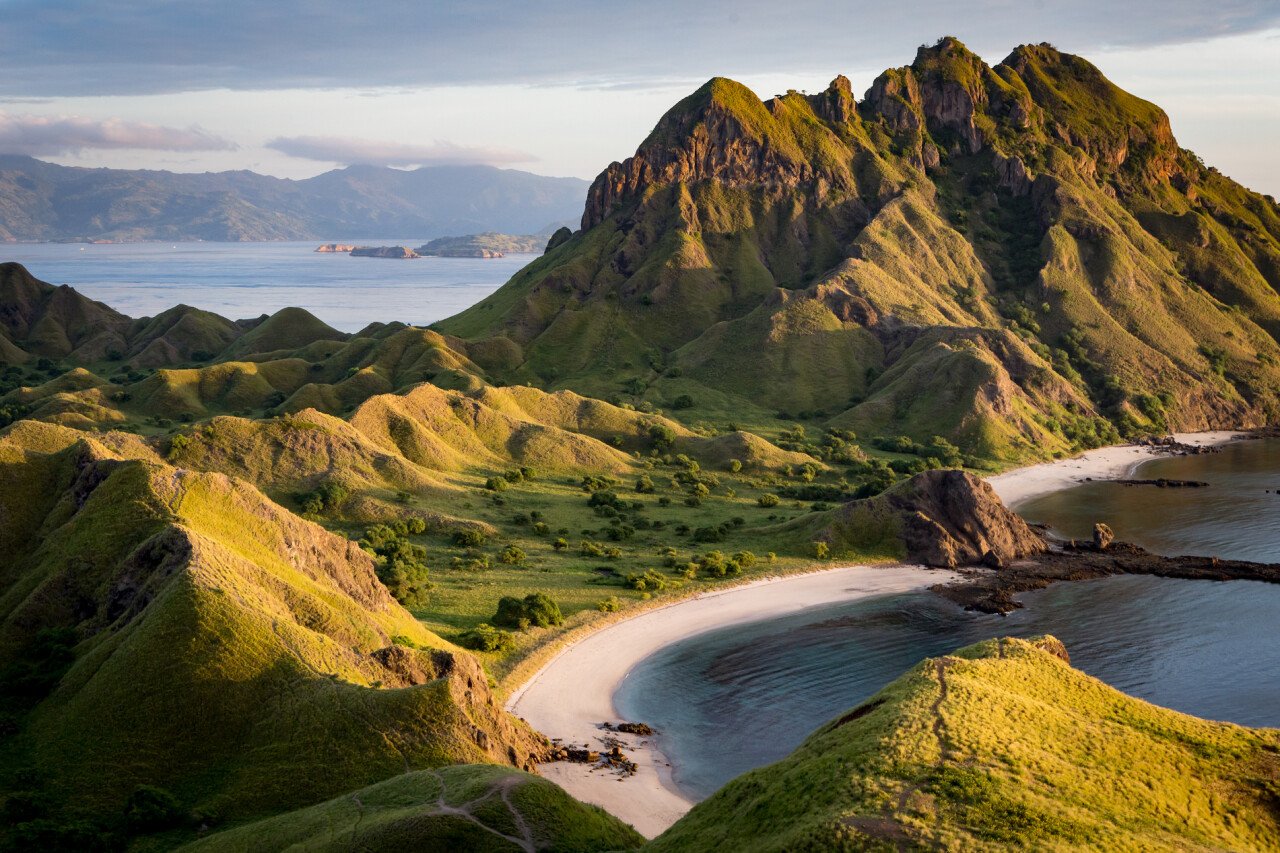
Komodo National Park sits east of Bali, roughly an hour and a quarter by air to Labuan Bajo on Flores. It is the only place on earth where Komodo dragons live in the wild: one of Indonesia's rarest animals, found on Komodo, Rinca and a few neighbouring islands and nowhere else. The landscape is unexpected: bare, sculpted hills that turn from green to copper as the dry season advances, and beaches that are faintly pink where white coral sand mixes with fragments of red coral ground down by the waves.
Almost everything here happens by boat. The dragons, the pink beaches, the ridge on Padar with its three bays, the mantas at Manta Point: they are stops on a sea route rather than places you drive to. That is why a private boat changes the experience. You set the pace, you stay where the light is good, and you sleep on deck with nobody else's schedule in mind. A cruise of several days gives you sunrises on deck, nights on board and more time for snorkelling, swimming and unhurried stops; a single full day with the key stops works if time is short. A private boat suits couples, families and small parties of friends alike.
The sea sets the calendar more than the thermometer does. Two things are worth settling before you fix dates: when to go, which our guide to the best time to visit Komodo covers month by month, and how to reach Labuan Bajo, which we arrange as part of a private journey through Komodo.
Sumba: a quieter Indonesia of villages, hills and waterfalls
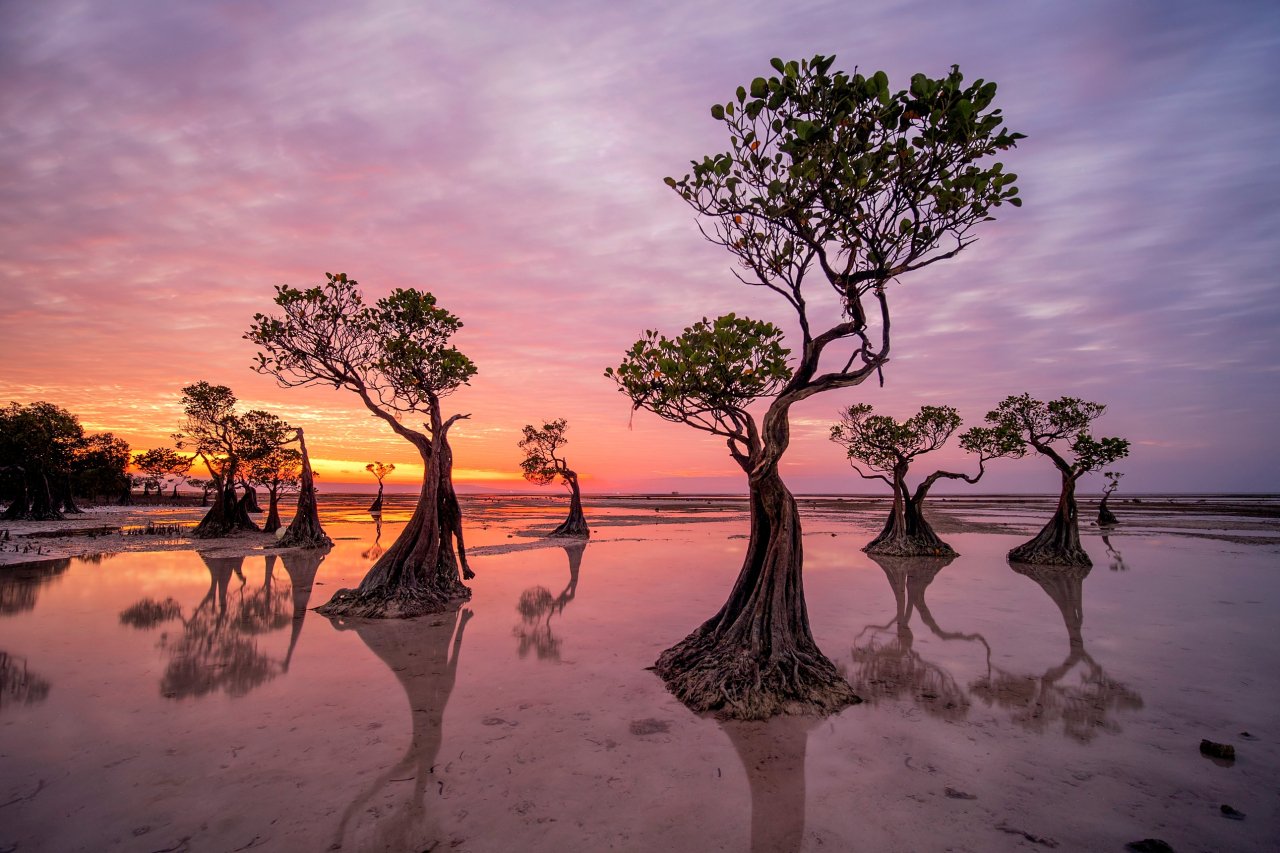
Sumba lies south of Flores, one of the southernmost islands in the country, and mass tourism has not reached it. The island is dry, open and unhurried: grass hills, limestone cliffs, beaches without a single umbrella, and villages where houses with steep thatched roofs rising as high as twenty metres still stand around ancestral stone tombs.
This is a place where the route matters as much as the stops. The west and the east are different worlds, and the road between them is part of the point. Over four days, travelling from west to east, you can visit a traditional village and hear about the ceremonies that still shape the year, swim beneath a waterfall, swim among coral reefs that see almost no one, and wait for sunset at Walakiri, where mangrove trees grow straight out of the shallows in strange, bent shapes and have become a symbol of eastern Sumba. Flights from Bali take about an hour.
We travel Sumba privately, with a driver and a guide who know which families welcome visitors and when. See Along the Roads of Wild Sumba.
Raja Ampat: the reefs at the far edge of Indonesia
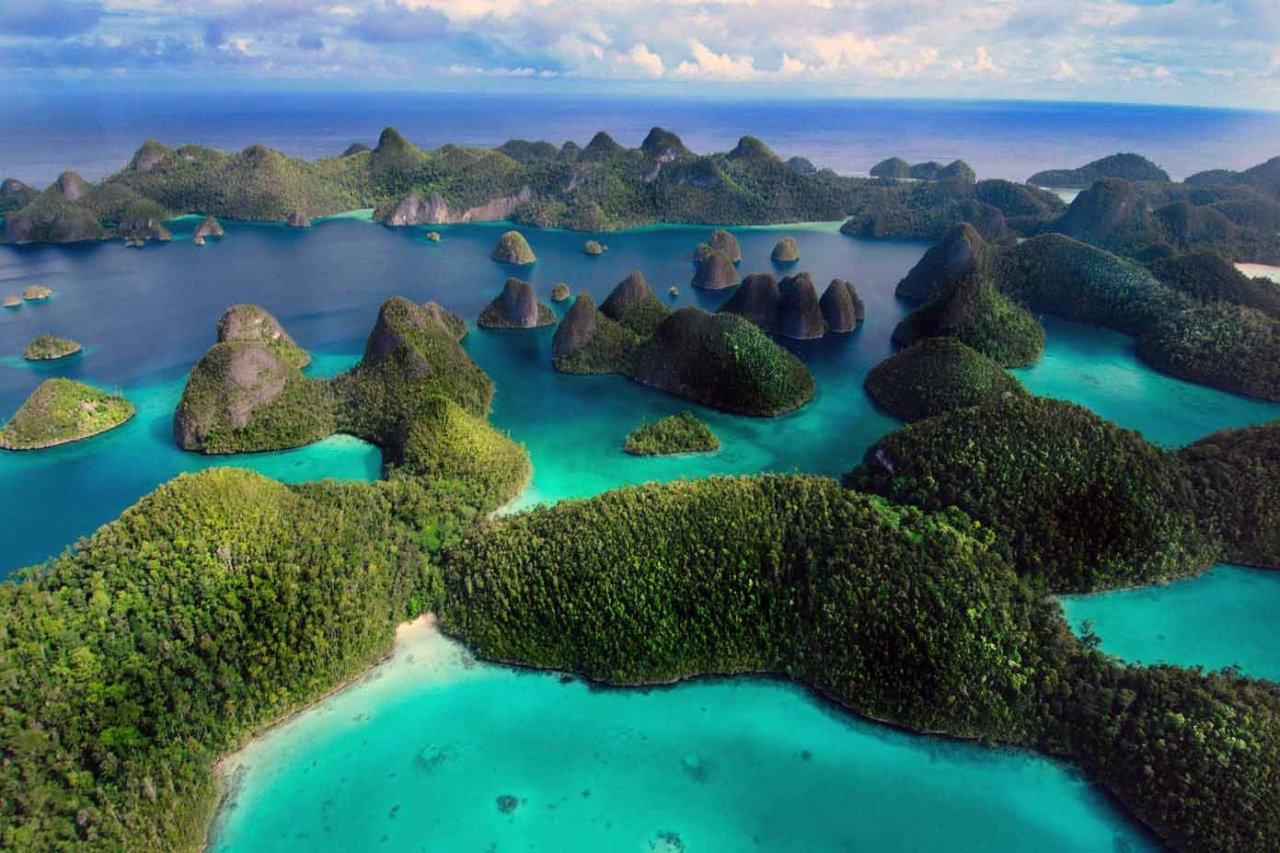
Raja Ampat is an archipelago off the western tip of Papua, and it is spoken of as one of the richest marine regions on the planet. The numbers marine scientists quote are extraordinary: more than 1,500 species of reef fish and around three-quarters of the world's known coral species. In practice that means water of unusual clarity, coral gardens that begin a metre below the surface, turtles, reef sharks, dozens of sites well known to experienced divers and, in season, mantas. Divers plan years around it; snorkellers need nothing more than a mask.
It is also remote. There is no town to speak of, mobile signal comes and goes, and many villages keep a rhythm that tourism has barely touched. A visit to a Papuan village, arranged properly, is one of the quieter privileges of the trip: local life, traditions and the hospitality of people for whom the ocean, boats and islands are simply part of the ordinary day.
Getting there takes commitment: flights to Sorong, a boat crossing, then further boats between islands. Raja Ampat is not a destination to improvise. We suggest seven days, accompanied throughout, with the logistics, permits and the level of comfort, from a resort to a liveaboard, settled before you leave home. See Beyond the Ocean — Raja Ampat.
Sumbawa: whale sharks and a coast without crowds
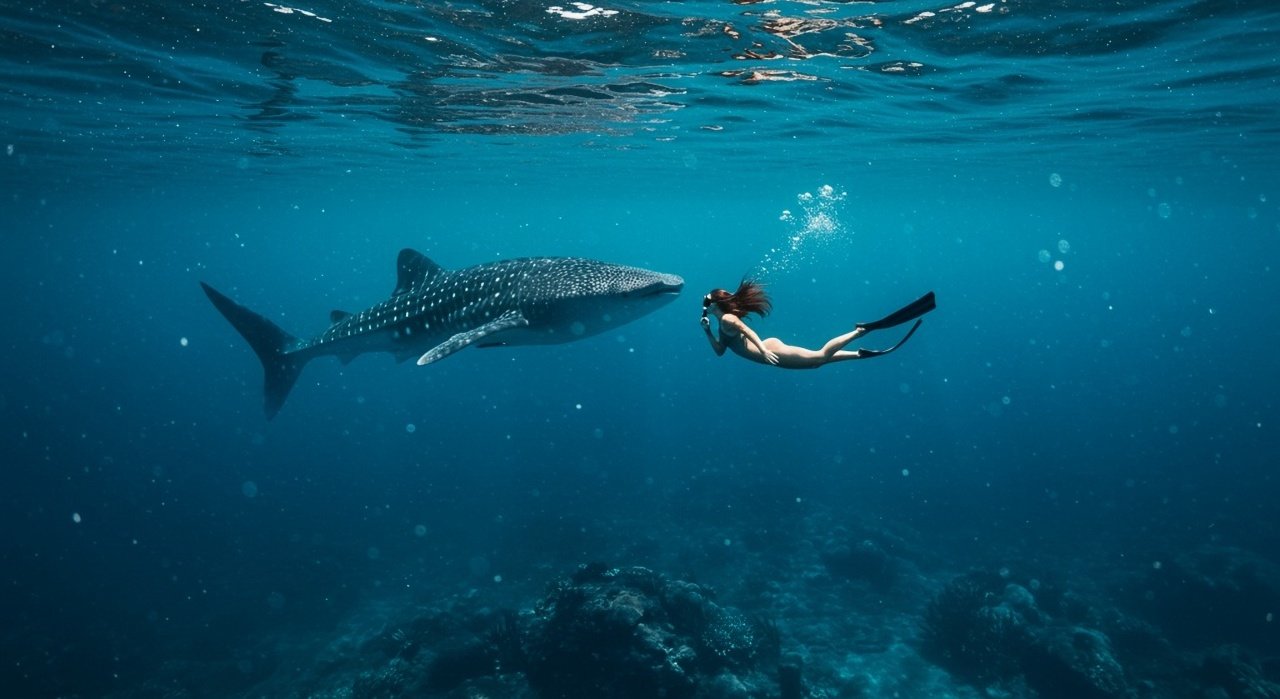
Sumbawa is the large, little-visited island between Lombok and Flores. Its draw is Saleh Bay, where whale sharks gather around the fishermen's floating platforms and can be met in the water at first light. They are gentle, slow and enormous, and the encounter is calmer than any description suggests.
Beyond the bay there is Moyo Island, with the tiered pools of the Mata Jitu waterfall and a reserve where deer wander to the beach, and the small island of Kenawa, a grass hill in the sea. Sumbawa rewards those who want Indonesia with almost no one else in the frame. See Meeting the Giants of Sumbawa.
Lombok to Komodo: several islands, one boat
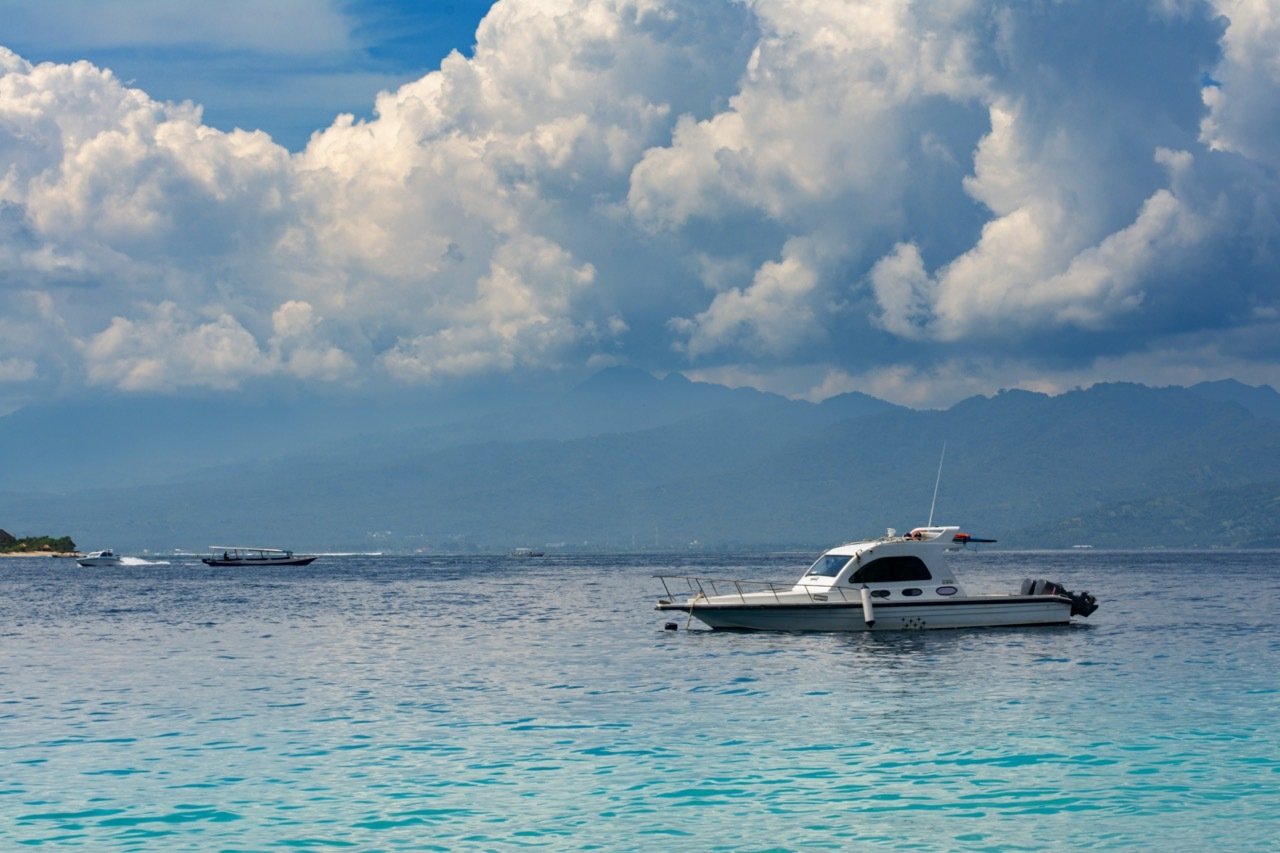
If you would rather not choose, the sea can do the choosing for you. Between Lombok and Komodo runs one of the most beautiful passages in the country, and a yacht turns it into a single unhurried journey: Lombok, then the Sumbawa coast, Kenawa, Moyo and Saleh Bay, then the climb to the top of Padar, the pink beach, the dragons and the mantas over Komodo's coral reefs.
This is not a journey to repeat on your own: some of these places are reachable only from the water, and the route bends with the weather, the currents and the crew's experience. Four days is the natural length. The passage works in either direction, with the same stops in a different order, so the choice usually follows the rest of your Indonesian itinerary or your flight from Bali: begin near Bali and end in Labuan Bajo, or the reverse. On a private yacht there is no departure date but yours. See A Yacht Just for You.
Five destinations side by side
Destination | Best for | Time from Bali | How long | Season |
|---|---|---|---|---|
Komodo | Dragons, sea days, mantas | About 1 h 15 by air to Labuan Bajo | 2–4 days | Roughly April to November |
Sumba | Villages, hills, empty beaches | About 1 h by air | 4 days | Roughly May to October |
Raja Ampat | Reefs, diving, remoteness | A full day of travel via Sorong | 7 days | October to April is calmest at sea |
Sumbawa | Whale sharks, quiet coast | By air via Lombok or Bima, or by sea | 2–3 days | Dry season, April to October |
Lombok–Komodo by yacht | Several islands, no unpacking | Lombok is 30 minutes by air | 4 days | Dry season, April to October |
Seasons are guides, not promises. Conditions change from year to year and from one side of an island to the other.
Komodo, Sumba, Raja Ampat, Sumbawa and Lombok are not competing destinations but different ways to continue the journey and see the country. Choose one, or bring several islands into a single route; it depends only on what you want the next chapter to be.
Questions we are often asked
Which is the easiest to add to a Bali trip?
Komodo. The flight is short, two or three days are enough, and the sea does the rest.
Which is the least touristic?
Sumba and Sumbawa. Both are large islands with a handful of visitors and long stretches of coast where you will meet no one.
Is Raja Ampat worth the journey?
For anyone who cares about the underwater world, yes. It takes a day to reach and a week to do justice to, which is precisely why it stays the way it is.
Can two destinations be combined?
Naturally. Komodo pairs with Flores or with the sea passage from Lombok; Sumba and Sumbawa sit close to each other; Raja Ampat is best kept as its own chapter.
Do I need to dive?
No. Komodo, Sumbawa and Raja Ampat are all remarkable with a mask and snorkel. Diving adds depth, not necessity.
When should I not go?
January and February bring wind and rain to Komodo and Sumbawa. Raja Ampat's rougher months are June to August. We will tell you plainly if your dates fall on the wrong side of a season.
Soulscape shapes private journeys through Komodo, Sumba, Raja Ampat, Sumbawa and the seas between them, around your pace and your dates. Tell us which of these you keep returning to, and we will design the route from there.